
Turbo Soccer Training Guide: An Evidence-Based Practice Routine
An ordered Turbo Soccer practice routine built from real drills: Free Play contacts, structured drill blocks with pass checks, the Rings and Targets minigames, casual-match application and a ranked-readiness check.
Turbo Soccer practice works best in a fixed order: clean ground contacts before flips, flips before aerials. Every stage below happens in a real game venue — Free Play, the built-in Rings and Targets minigames, then casual matches — and every drill ends with an observable pass check, so you always know whether to repeat a block or move on.
The routine at a glance
- Open Free Play — from the main menu, or jump in while waiting in a matchmaking queue.
- Pass the ground gate — single jumps and clean contact with rolling balls before any flip work.
- Run a drill block with its pass check (table below).
- Fly Rings and grind Targets for aerial pathing and controlled shooting.
- Apply it in casual matches, then tick the ranked-readiness checks before queueing ranked.
Start in Free Play
Free Play is the routine's base venue. Open Play from the main menu and choose Free Play to practise before your first Casual match. It is also reachable while you wait in a standard matchmaking queue, where it acts as an unrestricted training ground — drive around, take shots, practice aerial maneuvers — and it still awards profile XP, so drill time is never dead time. The suggested progression across modes is Free Play → Casual → Ranked.
Ground contacts gate everything
Three guides agree on the early order, and it gives the routine its spine:
- Finish the tutorial first. The guided onboarding covers throttle, drifting and boost activation, so your input timing is understood before you drill. It is an introduction, not a complete control map — the controls guide has the full binds.
- Practice single jumps and ground balls. Avoid spamming flips until you can cleanly make contact with ground-level rolling balls. That clean contact is the gate.
- Then flips, then aerials. Practise flips in Free Play before attempting aerial shots in Ranked. If you catch yourself over-committing to aerials in matches, the fix is the same rule: ground game first, then aerial drills.
While you are in the settings tab, tune camera sensitivity until the view tracks your car comfortably — a mis-set camera undermines every later drill. The camera settings guide covers the values worth trying.
Pick one skill, run its block
Choose the skill that is currently losing you goals and run its block; each drill carries a pass check, and finishing the check is what moves you forward.
| Drill | What it trains | Pass check |
|---|---|---|
| Figure-eights or no-boost lane changes | Steering without the boost crutch | Complete the pattern without boosting |
| Ball cam on, then forced car cam for 20 seconds | Camera discipline | Finish the window or save attempt in the opposite camera |
| Small pads only for one lap, then big pads only | Boost pathing and pad reading | End with at least half a tank near your net |
| Boost taps toward the net | Measured boost use | Reach midfield with half a tank remaining |
| Ten far-post shots from the right, then ten from the left | Ground finishing | Complete ten per side |
| Flip into the ball: jump, directional flip, soft touch | First-touch control | Get a soft first touch after the flip |
| Eight front-flip bumps, then eight floating-ball challenges | Aerial touches | Land facing your own net every time |
| Five straight kickoffs with an early touch; five lose-and-rotate reps | Kickoff reliability | Complete both rep sets |
This set comes from a community checklist designed for Beta 1.0 — it is not an in-game system, and running it does not by itself guarantee any result. It is built for Free Play or a casual lobby in a full ~12-minute form, or a 5-minute short form: one no-boost lap, ten shots (five each side), five aerials, two kickoffs, then equip your main car and queue.
Two execution details make the blocks work. On kickoffs, boost straight toward the center sphere with all four wheels grounded, so the first collision does not launch you off target. And because boosting heavily amplifies forward momentum, release the boost button for a moment whenever you sail past the ball, then steer back to your target — this is exactly the control the no-boost and boost-tap drills build.
Rings for pathing, Targets for shooting
Two built-in minigames slot directly into the routine.
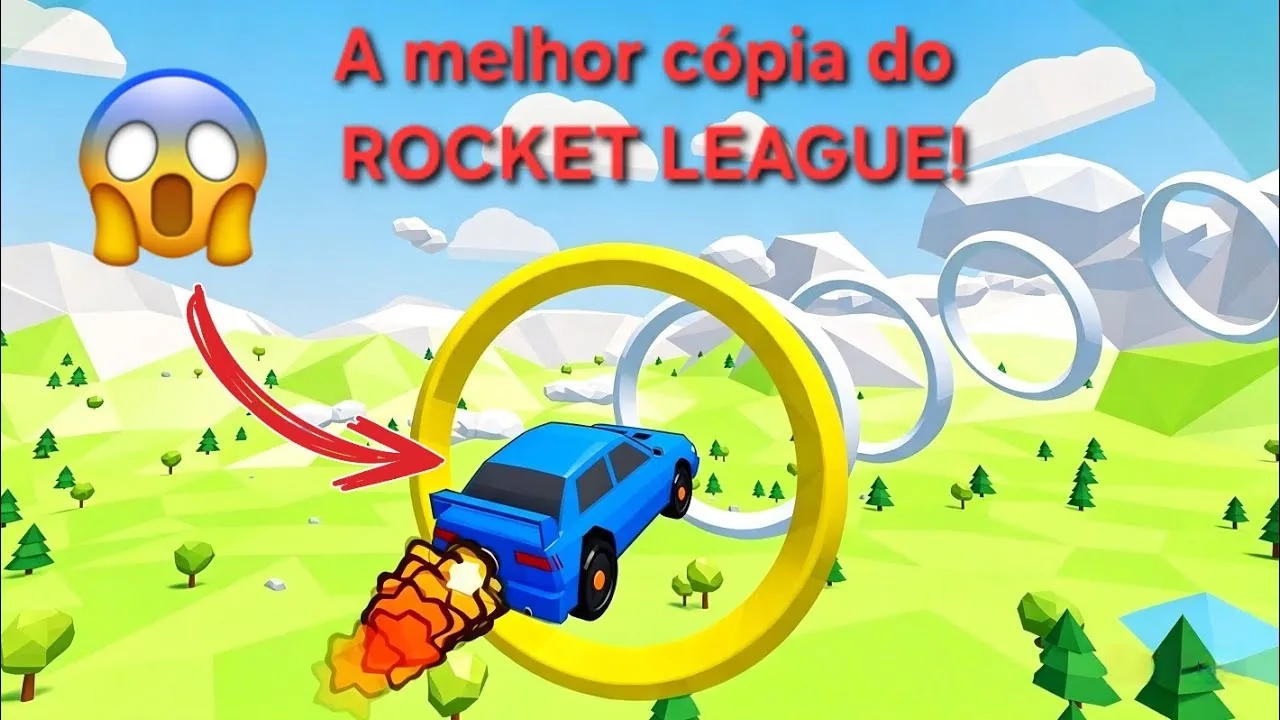
Rings (aerial pathing). The ring course trains car movement and aerial control: fly through the yellow rings without losing control. In gameplay footage, the player holds the right mouse button to stay airborne, beginners miss often, and falling drops you back a level of the course. Keep it simple at first — one creator recommends plain car movement first and saving spins until you are more experienced. Those course specifics come from a single recorded session, so expect some variation by course or patch.
Targets (controlled shooting). You must hit the ball onto a target that changes position between attempts, difficulty steps up roughly every four shots, and a timer bounds each round. A circle indicator shows where the ball will land — use it to line up contacts. One creator rates Targets possibly the best practice mode in the game, because it creates the scenarios where you actually want to hit the ball, and that repetition carries straight into matches.
Reviews list both modes as shipping with the game itself, and both appear in recent gameplay footage — but Turbo Soccer is in beta, and menus can be renamed or reshuffled between updates. If a mode is missing from your build, fall back to the matching free-play block above. The full directory of modes lives on our minigames page.
Make matches the exam
Drills only count when they show up in games. Two documented ways to convert practice:
- The full application session: claim any current codes and sort your car in the garage first, then five minutes of free-driving focused on soft touches, five minutes of kickoff drills, and two casual matches applying one scoring pattern. Add a short ranked block only if your inputs feel calm.
- The one-match focus: spend a single casual match concentrating only on clean steering into the ball. Cut unnecessary camera wiggles and keep your boost finger ready but idle until the touch window opens.
In casual 1v1, the decisions to rehearse are controlling the ball, blocking shots, intercepting passes and loose balls, and staying patient when the opponent has possession instead of rushing straight at them. Use boost, jump and flip while controlling the ball, not just to drive fast.
The ranked-readiness check
Queue ranked only when you can honestly tick these:
- The camera feels normal.
- Your boost taps are intentional.
- You converted at least a few warm-up shots.
The same checklist adds two hygiene items worth copying: claim codes before the session so you are not distracted mid-match, and equip the car you actually intend to queue with — warming up in one car and queuing in another quietly cancels the warm-up. Holding boost during finishing drills has the same effect. Adapt the blocks to your device: mobile players can shorten aerial blocks and extend ground finishing, while controller players can add dead-zone checks before section one.
For a short pre-session warm-up, borrow the camera guide's routine: spend two to three minutes driving the arena perimeter, practicing wall transitions and jumping into flips, then toggle Ball Cam on and off while cornering to confirm the car stays legible on screen.
Then go deeper
Run the sequence, then open the focused guide for whichever stage felt weakest: ball control for first touches, shooting tips for finishing, the aerial guide for the rings-to-aerials step, the boost guide for pad pathing, or the beginner guide if any basic above felt shaky. And if ranked is new territory, see how ranked mode works before you queue.
Related Guides
Ball Control Guide
Learn how approach lines, contact points, and hitbox shapes steer the ball, and use the landing circle to position your car.
Shooting and Goal Scoring Tips
Line up behind the ball, finish ground shots at the far post, and know exactly when a goal counts.
Aerial Guide
Go from takeoff to a first controlled aerial touch with Right Mouse jump, float, flips, and a short Free Play drill.
Ranked Mode: Entry and Match Rules
Learn the level gate to queue Ranked, plus the formats, HUD rules, and standings that set it apart.